Optimization AI generated accurate recommendations. The challenge wasn't correctness — it was helping account managers understand when and why to act on them with confidence.

Iris manages campaigns on Meta Ads Manager. Once launched, optimisation relied entirely on manual monitoring. Account managers handled multiple campaigns at once. During busy periods, monitoring slowed while campaigns kept spending.
Optimization AI generated accurate recommendations. Adoption stayed low. Not because the AI was wrong, but because acting on it felt hard to justify in environments where every decision must be defensible.
Acting on AI felt difficult to justify — especially when decisions
must be defensible to clients and stakeholders.
I redesigned Optimization AI around three modules, each supporting a distinct moment. The critical addition: strategy history. Previously, once campaigns launched, the original AI strategy disappeared. Saving it let users connect decisions to outcomes.
An AI wizard collected inputs (dates, budget, goals, conversion type, audience, industry) and generated multiple complete strategies. Users compared and launched.
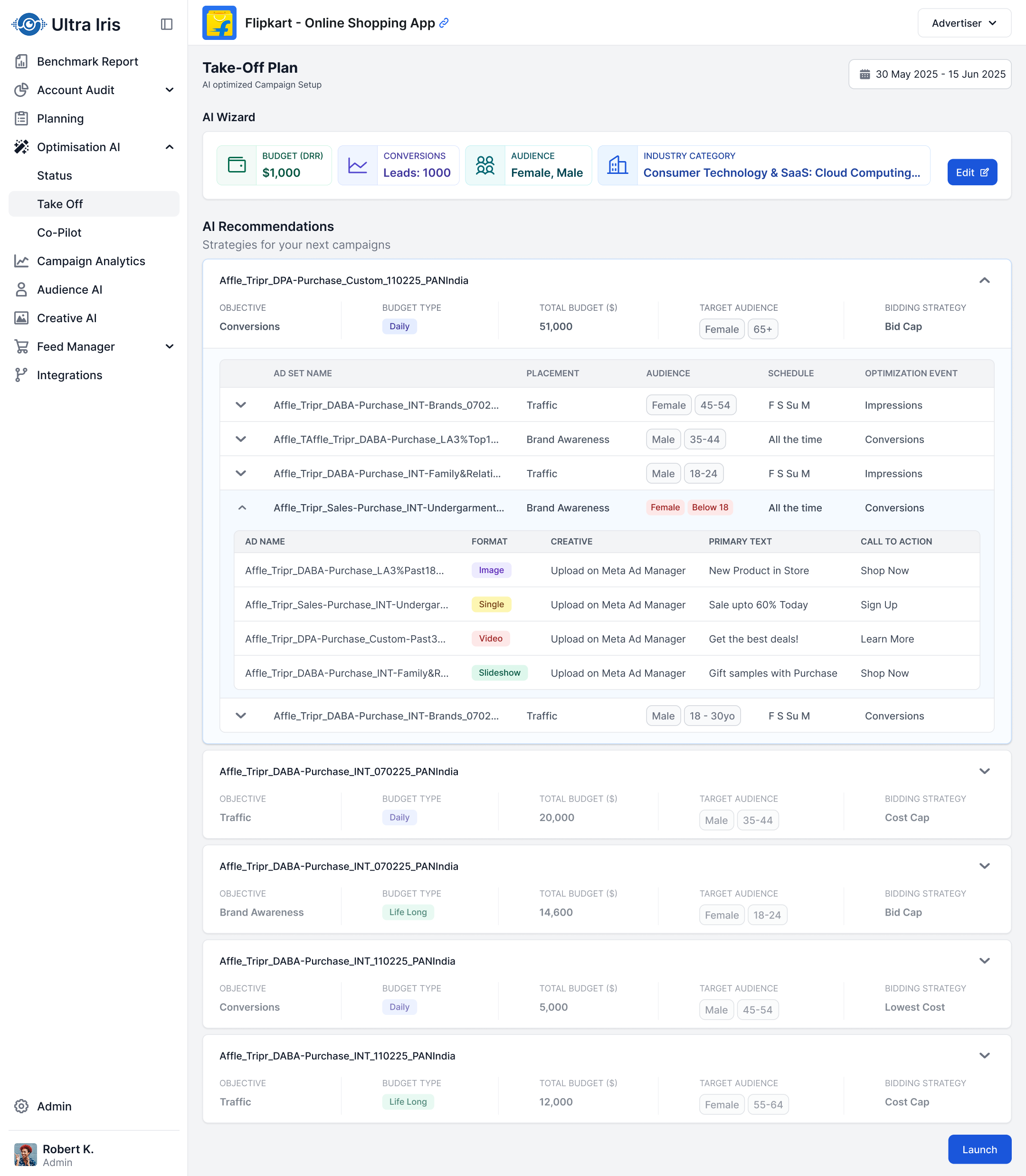
Once a campaign launched, the original strategy disappeared. Performance graphs showed results, not the reasoning behind them. Saving strategy history created a direct link between what was decided and what happened.
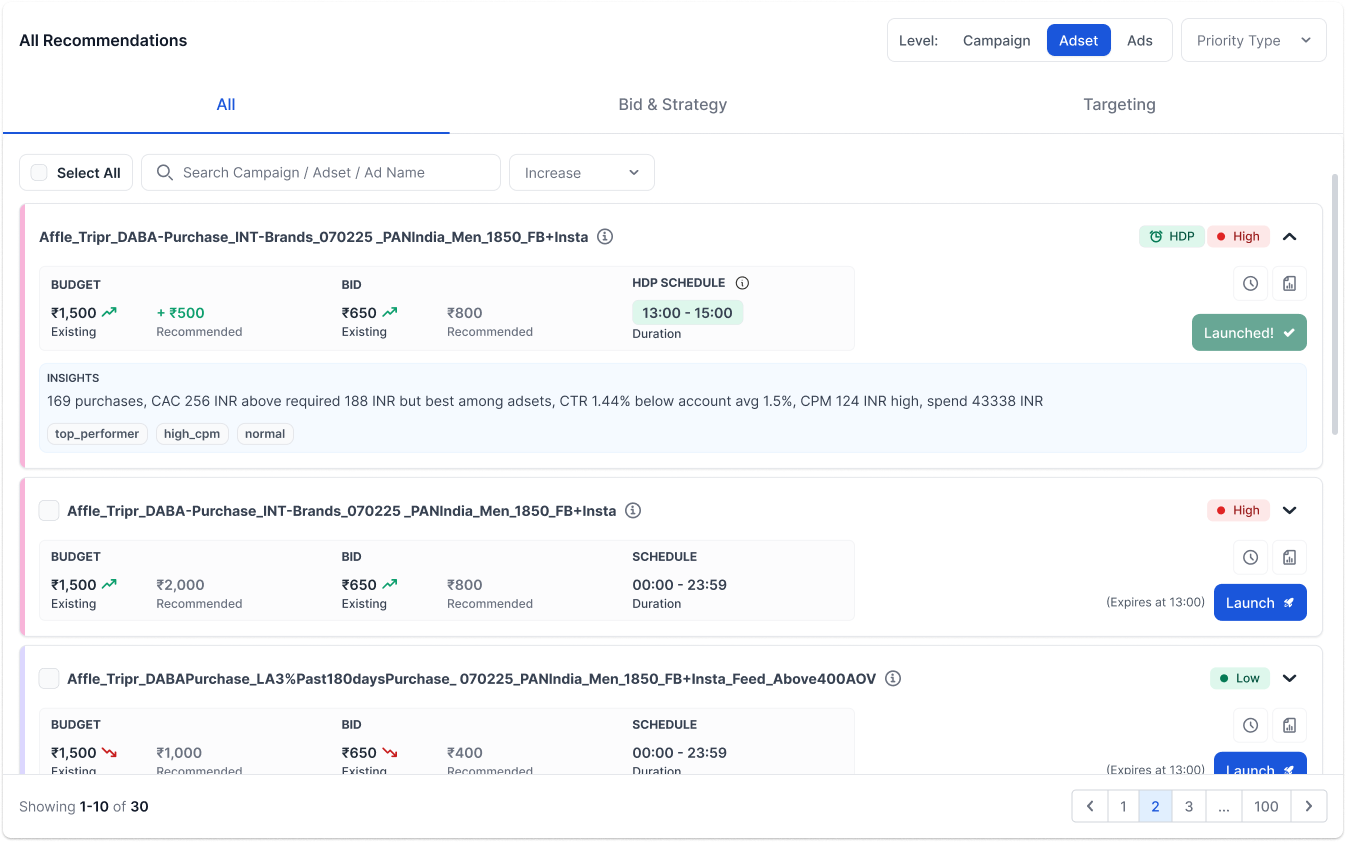
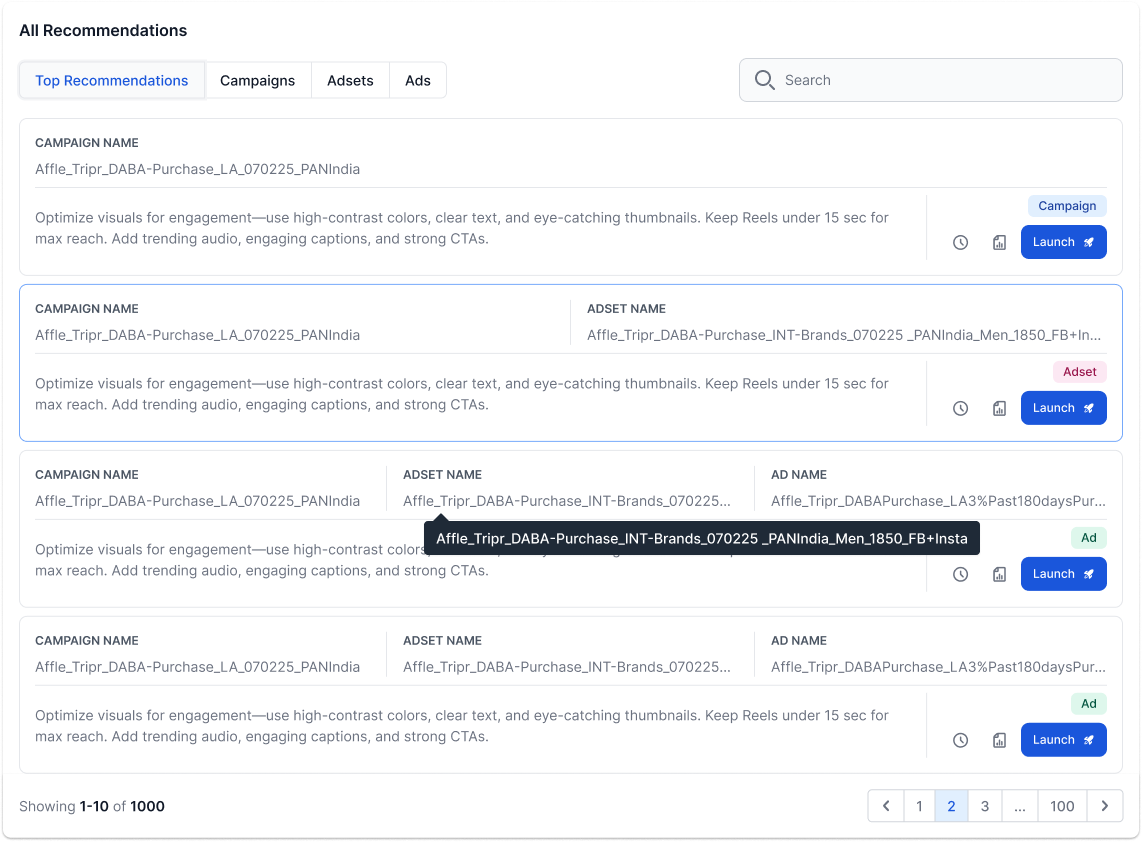
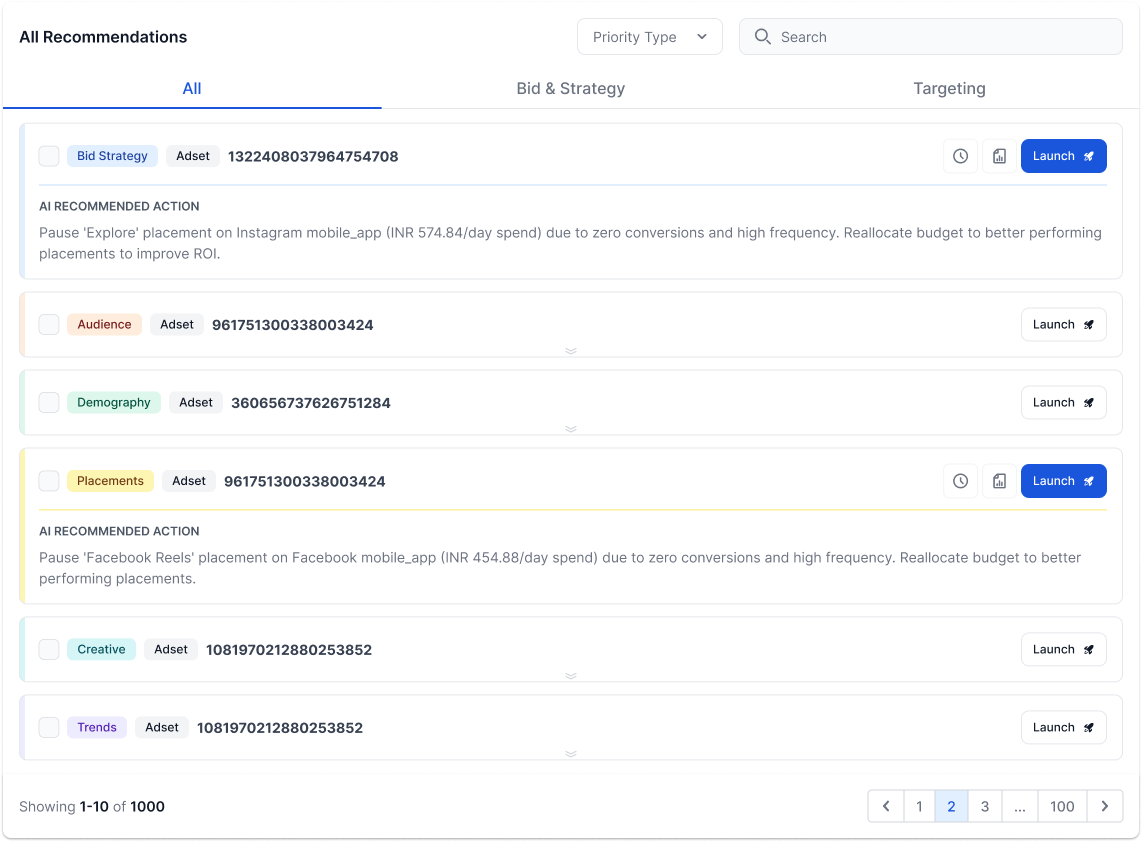
The core product surface, and where my design contribution most reshaped the product. Originally a flat list from a single AI agent. It quickly got overwhelming. The screen went through multiple iterations.
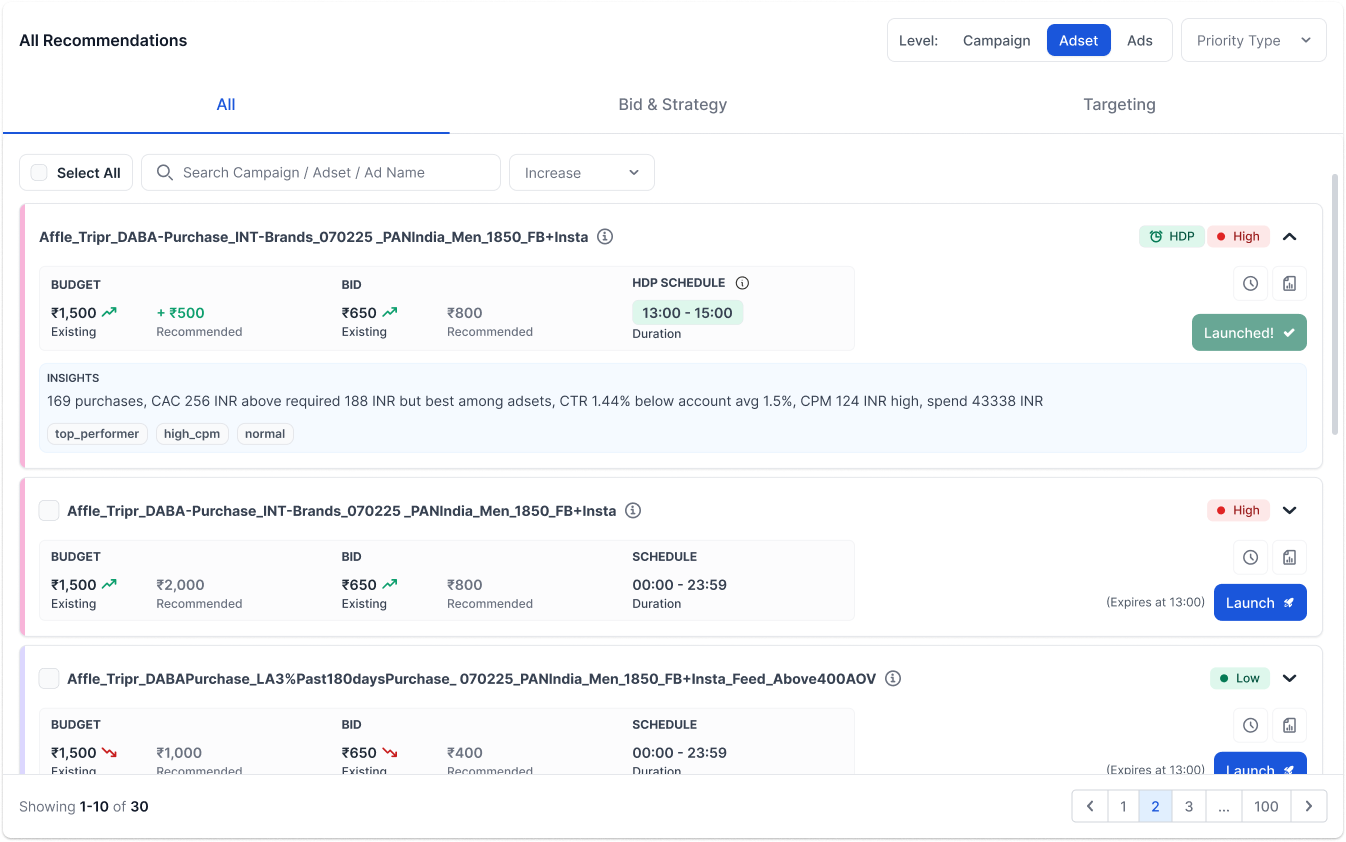
Recommendations first organised by Campaign → Ad Set → Ad. As AI logic expanded, also grouped by agent intent (Bid & Strategy, Targeting) so users could see why a recommendation existed.
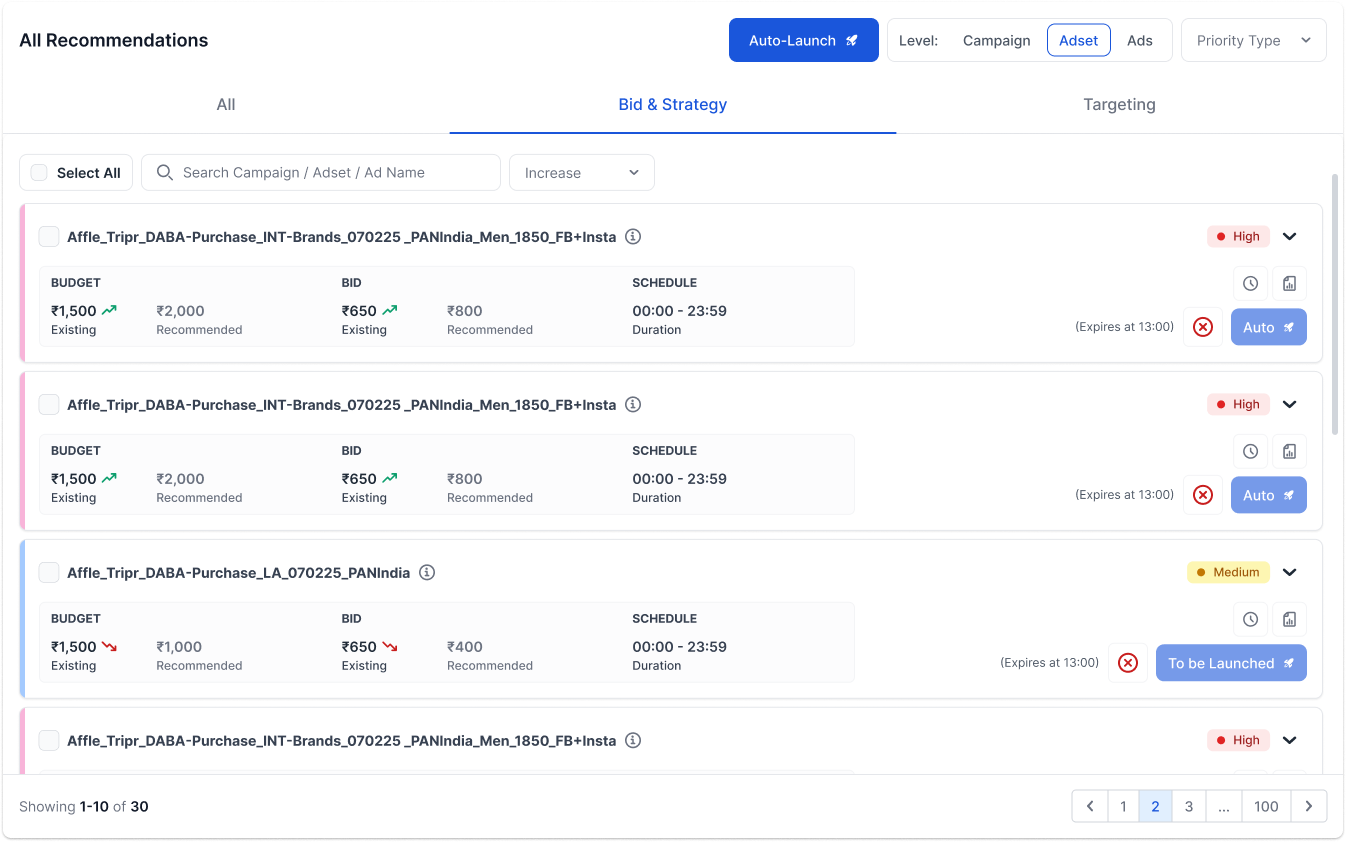
Tabs by intent (All, Bid & Strategy, Targeting) running alongside filters by structure (Campaign, Ad Set, Ad). Users could move between strategic and operational views without losing context.
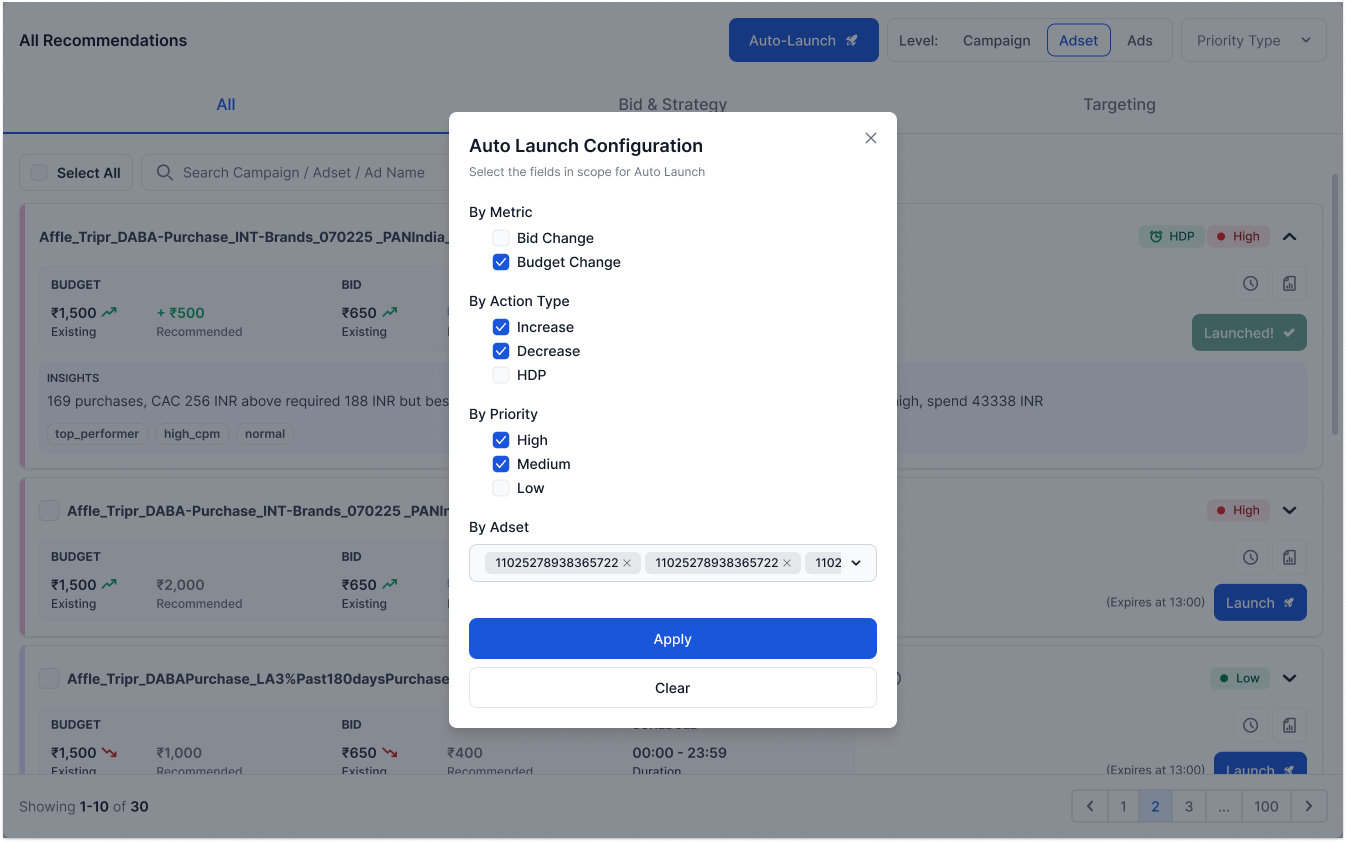
Manual management got repetitive at scale. Auto-Launch ran actions on configurable rules (metric, action type, priority, ad set). Automation supported users instead of replacing them.
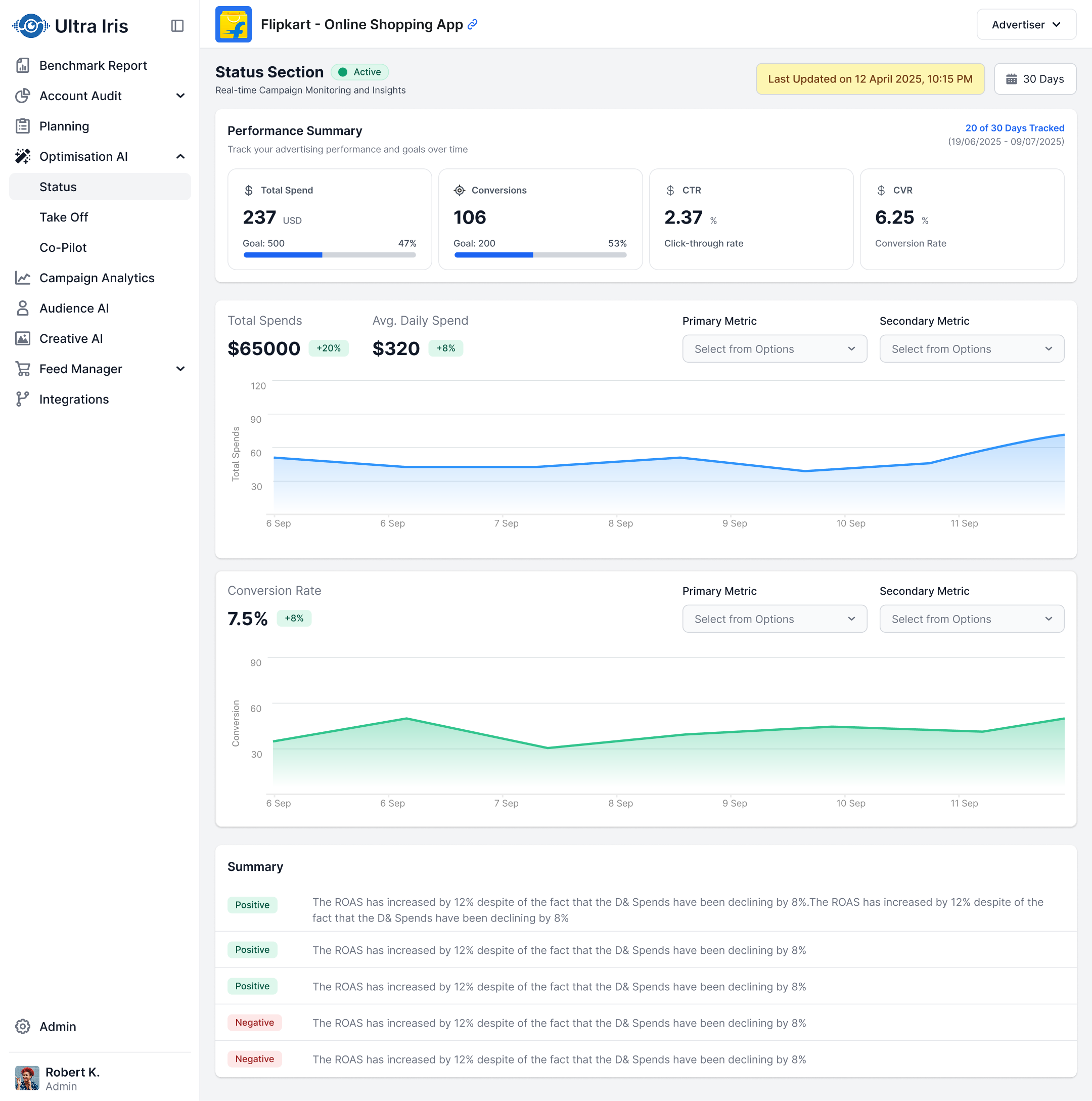
Status connects outcomes back to strategy decisions. Performance trends paired with strategy history. Metrics simplified to four north-stars: Total Spend, Conversions, CTR, CVR. Results build trust faster than transparency.
Enterprise AI succeeds when users can
connect actions to outcomes.
Designing for AI isn't about exposing algorithms. It's about helping people know when a decision is safe to make and giving them evidence to stand behind it.